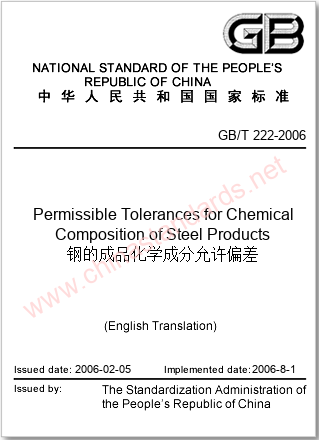
GB/T 222-2006 in English
SUPERSEDEDPermissible Tolerances for Chemical Composition of Steel Products
- Issued on:2006-02-05
- Implemented on:2006-08-01
- File Format:PDF
- Delivery:Via email within 1~3 business days
$39.00
《GB/T 222-2006钢的成品化学成分允许偏差》由TC183(全国钢标准化技术委员会)归口,TC183SC2(全国钢标准化技术委员会基础分会)执行,主管部门为中国钢铁工业协会。
本标准规定了非合金钢(沸腾钢除外)、低合金钢、合金钢的成品钢材(包括钢坯)的化学成分相对于规定熔炼化学成分界限值的允许偏新式,并给出了相关术语的定义。
本标准适用于钢的产品标准、技术规范对成品化学成分允许偏差的规定。
1 Scope
This standard prescribes permissible tolerances of chemical composition of finished unalloy steel (excluding boiling steel), low alloy steel and alloy steel products versus threshold value of melted chemical composition, as well as relevant terms and definitions.
2 Terms and Definitions
This following terms and definitions are applicable to this standard.
2.1 Heat (or cast/ladle) analysis
It refers to a procedure that taking ingot sample during molten steel casting to make test sample and then carrying out chemical analysis. The analytic result refers to average chemical composition of molten steel of the same batch.
2.2 Product analysis
Product analysis refers to take sample from processed finished steel product (including steel feed) and then to analyze its chemical composition. Product analysis is mainly used to check chemical composition, and it is also called check analysis. Due to the fact that molten steel is distributed unevenly (segregation) during crystallization, composition value of product analysis is different from composition value of heat analysis sometimes.
2.3 Permissible tolerances for product analysis
It refers to that although composition value of heat analysis is within the exceed composition threshold value specified in standards due to segregation of steel composition. A permissible value is specified for the degree exceeding the threshold value, and the permissible value is the permissible tolerance for product analysis.
3 Sampling and Sample-making Methods for Product Analysis
Sampling and sample fabrication used to measure chemical composition of finished steel product shall comply with methods specified in applicable national standards and industry standards, or other methods may be adopted through negotiations between both parties.
Foreword II
1 Scope
2 Terms and Definitions
3 Sampling and Sample-making Methods for Product Analysis
4 Chemical Analysis Method
5 Permissible Tolerance for Product Analysis

Loading PDF document...
Error loading PDF. Please make sure the file is valid and try again.


