
GB/T 33857-2017 in English
VALIDGeneral principles for energy conservation assessment-Combined heat and power generation project
- Issued on:2017-05-31
- Implemented on:2017-12-01
- File Format:PDF
- Delivery:Via email within 1~3 business days
$156.00
《GB/T 33857-2017节能评估技术导则 热电联产项目》由TC20(全国能源基础与管理标准化技术委员会)归口,TC20SC3(全国能源基础与管理标准化技术委员会能源管理与节能评估分会)执行,主管部门为国家标准化管理委员会。
Introduction
Overview of Energy Efficiency Assessment Technical Guidelines for Cogeneration Projects
GB/T 33857-2017 "Technical Guidelines for Energy Efficiency Assessment Cogeneration Projects" is a national standard of the People's Republic of China, which aims to regulate the energy efficiency assessment of cogeneration projects. This standard applies to new or modified and expanded cogeneration fixed asset investment projects that use steam turbines, gas turbines or gas-steam combined cycle power generation and heat supply as heat sources.
Scope of application and core clauses
This standard specifies the content and requirements of energy efficiency assessment for cogeneration projects, covering project preparatory stages, analysis and assessment, and report preparation. The core clauses include:
- Determine the scope of energy-saving assessment
- Collect basic information
- Conduct on-site investigation
- Energy-saving assessment of unit selection
- Energy-saving assessment of overall layout
Energy-saving assessment process and methods
| Evaluation dimensions | Scope of application | Indicator requirements | Evaluation steps | Comparative analysis |
|---|---|---|---|---|
| Unit selection | Gas turbine or combined cycle project | Heat rate, efficiency | Analyze the rationality of technical parameters | Compare with the advanced level of the industry |
| Overall layout | Overall Project Layout | Logistics Efficiency, Energy Loss | Optimize Functional Zoning | Improve Energy Efficiency |
Terms and Practical Applications
Cogeneration refers to a system that produces electricity and heat at the same location, usually using waste heat recovery technology to improve energy utilization. For example, while a gas turbine generates electricity, a waste heat boiler is used to generate steam for heating.
Implementation suggestions and optimization directions
In practical applications, it is recommended to:
- Optimize the unit selection plan
- Improve the equipment of energy metering instruments
- Strengthen the construction of energy management system
- Improve energy utilization efficiency in combination with external conditions
Summary: GB/T 33857-2017 provides standardized guidance for energy-saving assessment of cogeneration projects. Through scientific assessment processes and methods, it can effectively improve the energy efficiency of projects and promote sustainable development.

Loading PDF document...
Error loading PDF. Please make sure the file is valid and try again.
We also recommend
-

GB/T 33757.2-2024 in English
Energy saving ratio for distributed energy system of combined cooling, heating and power—Part 2: Multi-energies hybrid driven systems
2024-09-29 -

GB/T 6422-2009 in English
Testing guide for energy consumption of equipment
2009-03-11 -

GB/T 35057-2018 in English
Technical specification of waste heat utilization in coal gangue sintered brick tunnel kiln
2018-05-14 -
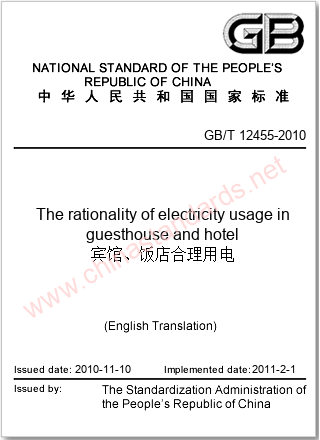
GB/T 12455-2010 in English
The rationality of electricity usage in guesthouse and hotel
2010-11-10 -

GB/T 15317-2009 in English
Monitoring and testing for energy saving of coal fired industrial boilers
2009-10-30 -

GB/T 45482-2025 in English
General principle for confirmation accounting of comprehensive energy consumption in enterprises
2025-04-25 -

GB/Z 18718-2002 in English
Energy saving directives for heat treatment
2002-05-17 -

GB/T 41013-2021 in English
Evaluation of energy performance of motor system
2021-12-31 -

GB/T 46564-2025 in English
Guidelines for energy saving use of air-consuming equipment in compressed air systems
2025-10-31


