
GB/T 34680.1-2017 in English
VALIDEvaluation model and general evaluation indicator system for smart cities - Part 1: General framework and requirements for developing evaluation sub-indicators
- Issued on:2017-10-14
- Implemented on:2018-05-01
- File Format:PDF
- Delivery:Via email within 1~3 business days
$146.00
《GB/T 34680.1-2017智慧城市评价模型及基础评价指标体系 第1部分:总体框架及分项评价指标制定的要求》由TC28(全国信息技术标准化技术委员会)归口,主管部门为国家标准化管理委员会。
Introduction
Overview of Smart City Evaluation Index System
GB/T 34680.1-2017 "Smart City Evaluation Model and Basic Evaluation Index System Part 1: Requirements for the Development of Overall Framework and Sub-item Evaluation Indexes" is an important standard in China's smart city construction field, aiming to provide scientific basis and guidance for the planning, construction and evaluation of smart cities.
Background and Significance of Standard Formulation
With the rapid development of information technology, smart cities have become a trend in global urban development. The formulation of GB/T 34680.1—2017 standard is based on the following background:
- The popularization of the application of Internet of Things technology
- The in-depth development of cloud computing and big data
- The demand for urban informatization construction is becoming increasingly urgent
Comparative analysis of standard frameworks
| First-level indicators | Secondary indicators | Explanation |
|---|---|---|
| Capability indicators | Level of open sharing and development and utilization of information resources | Evaluate the city's ability to use the new generation of information technology, including data sharing mechanism, platform construction, etc. |
| Effectiveness indicators | Degree of intelligence of urban infrastructure | Measure the actual effect of smart city construction, such as intelligent transportation system, digital public services, etc. |
| Network security assurance capability | Network information security management system | Evaluate the city's security assurance level in key information systems, including monitoring, early warning and emergency response capabilities. |
Explanation of professional terms and practical application cases
Taking information resource sharing as an example, a city has achieved data interoperability among government departments by establishing a unified information sharing platform. This not only improves administrative efficiency, but also promotes cross-departmental collaboration.
Implementation recommendations and technology evolution analysis
In the construction of smart cities, it is recommended that:
- Give priority to the implementation of core indicators, such as information resource sharing and network security management.
- Select extended indicators based on the characteristics of the city to ensure the applicability and operability of the indicator system.
- Use scientific methods such as the analytic hierarchy process (AHP) to determine the indicator weights and improve the accuracy of the evaluation results.
In terms of technology evolution, we should focus on the deep integration of new technologies such as artificial intelligence and 5G communication with the smart city system to promote the digital transformation and intelligent upgrading of cities.

Loading PDF document...
Error loading PDF. Please make sure the file is valid and try again.
We also recommend
-
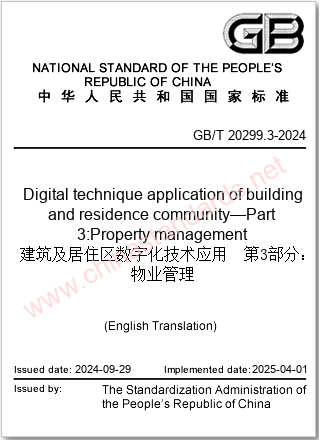
GB/T 20299.3-2024 in English
Digital technique application of building and residence community—Part 3:Property management
2024-09-29 -
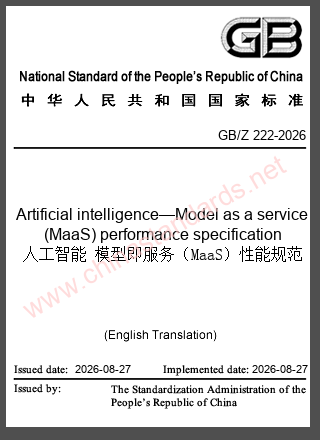
GB/Z 222-2026 in English
Artificial intelligence—Model as a service (MaaS) performance specification
2026-08-27 -

GB/T 47177.1-2026 in English
Quantum computing service platform—Part 1 : Architecture and functional requirements
2026-02-27 -

GB/Z 38623-2020 in English
Intelligent manufacturing—Human-computer interaction system—Technological requirements of semantic library
2020-04-28 -

GB/T 45628-2025 in English
Artificial intelligence—Knowledge graph—Knowledge exchange protocol
2025-04-25


